When we think about healthy eating, we usually focus on ingredients — but what about the cookware we use every day?
The pots and pans in your kitchen can influence your food’s taste, nutritional value, and even your long-term health. Some materials add beneficial minerals, while others may leach harmful substances into your meals.
In this post, we’ll break down the pros and cons of popular cookware types, and share some Amazon recommendations so you can switch to safer, healthier options today.
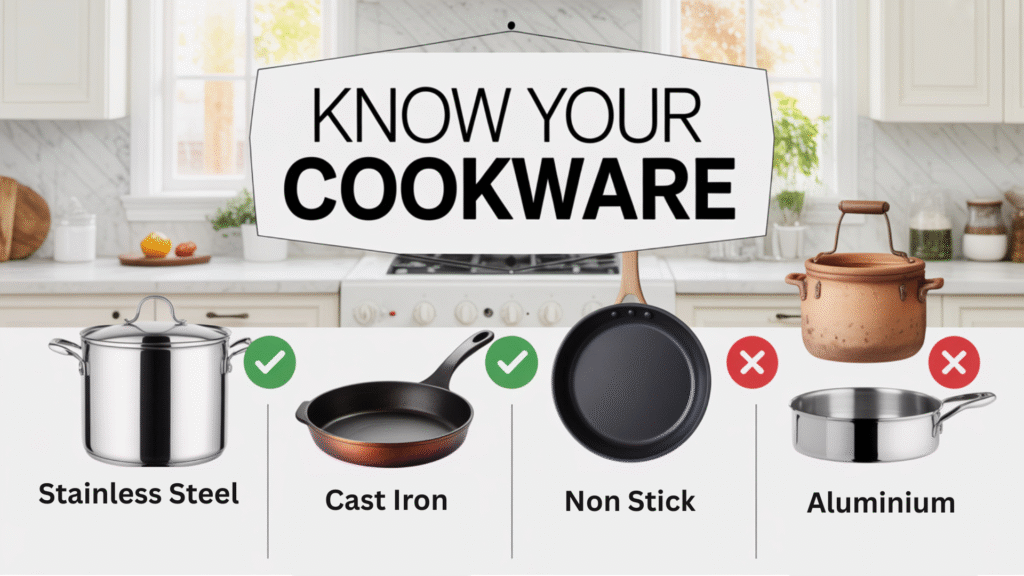
1. Stainless Steel — Non-Reactive & Safe for Everyday Cooking
Why it’s great:
Stainless steel is a durable, non-reactive metal that doesn’t leach harmful chemicals into your food. It’s perfect for boiling, sauteing, and even deep-frying. This material ensures your food retains its natural flavor and nutrients.
Why you need it:
- Doesn’t react with acidic foods like tomatoes or vinegar
- Long-lasting and easy to maintain
- Ideal for healthy, oil-free cooking
Best Uses: Soups, curries, pasta, and Sauteed vegetables.
2. Cast Iron — Adds Iron & Flavor Naturally
Why it’s great:
Cast iron is one of the oldest and healthiest cookware materials. It naturally adds trace amounts of iron to your food, which is beneficial — especially for those with low iron levels.
Why you need it:
- Naturally non-stick when seasoned properly
- Retains and distributes heat evenly
- Ideal for slow cooking, searing, and baking
Best Uses: Dosas, roti, grilled meats, curries, and baked dishes.
Tip: Avoid washing cast iron with soap — simply wipe it clean and apply a thin layer of oil to keep it rust-free.
3. Clay Pots — The Ancient, Mineral-Rich Cookware
Why it’s great:
Clay pots (also called earthenware) are 100% natural and porous, allowing slow, even cooking. They also add minerals like calcium, phosphorus, and magnesium to your food.
Why you need it:
- Enhances flavor and aroma naturally
- Retains moisture, making dishes softer and juicier
- Free of toxins and metals
Best Uses: Stews, rice, lentils, and slow-cooked traditional recipes.
Buy Clay Cooking Pot – Handmade & Eco-Friendly from amazon.
Tip: Always soak a new clay pot in water before use and avoid sudden temperature changes to prevent cracking.
4. Non-Stick Cookware — Convenient but Potentially Harmful
Why to avoid it:
While non-stick pans are popular for easy cooking and cleaning, many contain Teflon (PTFE) or other coatings that release toxic fumes when overheated. Over time, scratches can cause these chemicals to leach into food.
Health concerns:
- May release carcinogenic compounds
- Surface wears off easily
- Unsafe for high-heat cooking
Safer Alternatives:
✅ Use seasoned cast iron or ceramic-coated cookware instead — they offer non-stick benefits without harmful chemicals.
5. Aluminum Cookware — Lightweight but Risky
Why to avoid it:
Aluminum is cheap and conducts heat quickly, but it can leach metal into acidic or salty foods. Studies suggest excessive aluminum exposure may contribute to health issues over time.
Health concerns:
- May increase the risk of neurological problems
- Alters the taste of food
- Not suitable for long-term cooking use
Safer Alternatives:
✅ Opt for stainless steel or hard-anodized aluminum (which seals the metal).
🧂 Bonus: Choosing the Right Cookware for Your Cooking Style
| Cooking Style | Best Cookware | Why |
|---|---|---|
| Everyday Meals | Stainless Steel | Non-reactive & versatile |
| Slow Cooking | Clay | Adds minerals, enhances flavor |
| Frying & Baking | Cast Iron | Retains heat, non-stick when seasoned |
| Quick Stir-Fry | Ceramic or Hard-Anodized | Safer non-stick option |
| Health-Focused Cooking | Stainless Steel / Clay | No toxins, keeps nutrients intact |
Final Thoughts
The cookware you use plays a major role in your family’s health.
Switching from non-stick or aluminum to natural, non-toxic materials like stainless steel, cast iron, and clay can make your food safer, tastier, and richer in nutrients.
Start by replacing one or two pans — over time, you’ll build a kitchen that supports your healthy lifestyle.
👉 Check out our curated Amazon Idea List:
Healthy Cookware Collection — Safe, Natural & Durable